Programme
Date: 14 Oct 2025 (Pre-congress IASSIDD Academy Workshops)
Venue: Holiday Inn Singapore Atrium, Level 4
9:00 - 12:30
Pre-Congress Workshop 3
Changi 2
Advancing Global Autism Training and Outcomes: The HANDS Model as an Exemplar of Evidence-Based Practices, Scalable Implementation, and Transportable Treatment Models Across Singapore & the U.S.
Presenters: Tiffany Neal, Chan Xin Yi
Pre-Congress Workshop 4
Kallang
Lifelong learning and inclusion for people with IDD
Presenters: Mary-Ann O’Donovan, Vimallan Manokara, Nur Aziza, Elga Andriana, Hasrul bin Hosshan, Vivienne Riches, Loh Huey Ching
12:30 - 13:30
Lunch break (Only for those who registered for both AM and PM workshops)
Registration for PM Workshops
13:30 - 17:00
Pre-Congress Workshop 5
Changi 1
Design and implementation of effective services for Ageing Persons with IDD
Presenter: Phil McCallion; Mary McCarron
Pre-Congress Workshop 6
Changi 2
Unlock possibilities: Tech that transforms lives
Presenters: Susan James, Lenny Lai, Allan Cai
Pre-Congress Workshop 8
Kallang
Assessing the quality of positive behaviour support plans
Presenters: Karen Nankervis, Maria Vassos
Workshops
Time
Registration for AM Workshops
8:00 - 9:00
Workshop 1 - Changi 1
Publishing and reviewing manuscripts – tips for early career researchers
Presenters

-
Angela Hassiotis is Professor of the Psychiatry of Intellectual disability at the UCL Division of Psychiatry and honorary Consultant Psychiatrist at the award winning Camden Intellectual Disability Service.
Her main research interest is the evaluation of interventions for mental illhealth including behaviours of concern in people with intellectual disabilities across the lifespan. She has run several clinical trials and epidemiological studies and has authored over 300 publications.
She supervises MSc and PhD students and lectures nationally and internationally. She has received the NADD Stephen Reiss Research Award (2020) and the Frank Menolascino Award for Excellence (2023). She is the Editor-In-Chief of the Journal of Mental Health Research in Intellectual Disabilities, is one of the medical advisors for Research at the Baily Thomas Charitable Fund and a member of the Academic Psychiatry Faculty, RCPsych.

-
Associate Professor Kathleen Tait’s expertise in the field of learners with complex conditions stems from 30 years practical, administrative and consultative experience. Kathleen has worked in tertiary environments in the United Kingdom, Brunei Darussalam, Hong Kong SAR, Mainland China, Japan, and Australia. Kathleen is registered as an educational psychologist with the British Psychological Society. She specializes in the field of quality of life and the impact on families raising a child with a disability across the life span. Kathleen is lead editor and co-author of the 5th edition of the text: Diversity, Inclusion and Engagement, Melbourne: Oxford University Press. This text is on the OUP top ten best seller list and is a recommended textbook in 27 Australian Universities. Kathleen is an internationally recognized expert in disability, diversity, and ethnic communities with extensive experience in qualitative research methods including interviews and thematic analysis. She has published over 130 articles, has secured more than $2 million in research grants and supervised 20 HDR students to completion.

-
Rhonda Faragher is Professor of Inclusion and Diversity at the University of Queensland where she is Director of the Down Syndrome Research Program. She is a mathematics teacher by background and undertakes research that improves the quality of life of individuals with disabilities, particularly in inclusive classroom contexts. She is a Fellow of IASSIDD and Co-Editor in Chief of IASSIDD’s Journal of Policy and Practice in Intellectual Disabilities. She serves on the editorial boards of the International Journal of Disability, Development and Education, and the Mathematics Education Research Journal. In addition, she is an expert reviewer for international grant schemes.
Overview
Writing and reviewing manuscripts is fundamental to membership of the community of scholars. This interactive workshop will assist early career researchers (and those who have tips to share) to publish their research and review the work of others. Led by experienced journal editors and reviewers, this workshop will offer participants strategies and time for questions and discussion. Bring along a draft, if you have one in development.
There are hundreds of highly ranked international journals that publish scholarly articles and make a significant and original contribution to theory, practice, and research for the field of IDD. If you have ever wondered about what processes are used to select and publish articles, or if you would like to find out how you can increase your chances of being a published author, then this is the workshop for you!
Learning goals
Participants will:
Understand the reviewing and editorial decision processes
Develop their strategies for preparing manuscripts for submission to journals
Learn how to write a high-quality review that assists authors and editors
Workshop summary
1. Increasing your chances of publishing
What are editors and reviewers, looking for?
Understanding the reviewing and publishing process
Explaining criteria and common reasons for rejection
Strategies for choosing an appropriate journal for your manuscript
2. Preparing a manuscript for publication
From a focused topic to designing a research question.
Writing the title and selecting keywords
Following the author guidelines
Workshopping your draft manuscript (bring one along if you wish)
3. How to review a manuscript
When to say yes, when to decline
Acting ethically
Writing a report that helps editors make decisions and authors revise their work
Workshop 3 - Changi 2
Advancing Global Autism Training and Outcomes: The HANDS Model as an Exemplar of Evidence-Based Practices, Scalable Implementation, and Transportable Treatment Models Across Singapore & the U.S.
Presenters

-
Dr Tiffany Neal is a Psychologist and the Assistant Director of the HANDS in Autism® Interdisciplinary Training and Resource Center at Indiana University School of Medicine. She has a rich background in clinical neuropsychology, school psychology, and applied behavior analysis with a concentration in complex or dual diagnoses and experience across inpatient, outpatient, diagnostic, home, school and community-based service and treatment settings. In addition, she is active as an invited representative among local, state, national and international associations, and committees focused on autism, dual diagnoses, policies and funding, readiness and capacity building, implementation science, and program evaluation. Dr. Neal lends oversight within HANDS in Autism® to the approach, curriculum, partnerships, research and dissemination efforts for the Center.

-
Ms Chan Xin Yi is a Senior coach at St. Andrew’s Autism Centre (SAAC), DAC Sengkang branch. Having started as a coach a decade ago at SAAC DAC, she has worked with various adults with moderate to severe autism in the centre. When the Sengkang DAC was opened in 2019, she was selected to be the senior coach there and has been running operations under the guidance of the DAC Head of Adult Autism Services since. With a firm belief in the value of training and support for staff, she is involved as an instructor/trainer/facilitator in various mentoring/training/sharing sessions for the coaches.
She has been through the HANDS in Autism Train-the-Trainer programme back in 2021. Together with a team of two other trainers, she has since conducted three runs of the modified HANDS in Autism programme for new coaches in both DACs, with the close support in planning and guidance from Dr Tiffany Neal and her team.
Overview
The HANDS in Autism® model—developed at Indiana University in the United States—exemplifies a research-backed, modular framework for multidisciplinary capacity building. Results demonstrate high implementation fidelity, strong trainee engagement, and measurable improvements in practitioner competence and collaborative practices across settings. The HANDS in Autism® model aligns with IASSIDD’s person-centric professional development goals and provides a replicable roadmap for global adoption in varied cultural contexts. We invite researchers, educators, and policymakers to explore its transferability—and to consider next steps for dissemination and impact evaluation.
Learning goals
Participants will
· Understand the Core Components of the HANDS in Autism® Model
· Explore Cross-Cultural Adaptations of Autism Training
· Analyze Strategies for Scalable and Sustainable Capacity Building
· Apply Lessons from Implementation Science to International Training Efforts
· Identify Opportunities for Replication and Collaboration
Workshop summary
This interactive workshop explores how the HANDS in Autism® model—a comprehensive, evidence-based framework for autism training and systems change—has been successfully implemented in both the U.S. and Singapore. Participants will engage in hands-on activities and discussions that highlight how the model supports professionals, caregivers, and systems through practical tools, structured coaching, and fidelity-based implementation strategies. Drawing from real-world case examples, including Singapore’s national educator training initiative and U.S.-based cross-sector rollouts, the session will examine how the HANDS approach adapts to different cultural and system contexts while maintaining integrity and effectiveness. Participants will learn how to use components such as the HANDS-ACT™ and HANDS-FACT™ tools for goal setting, fidelity tracking, and collaborative teaming. By the end of the session, attendees will be able to identify key elements for scalable and sustainable autism training, assess readiness for implementation in their own settings, and walk away with adaptable resources and strategies to support individuals with autism in diverse, community-based systems.
Workshop 4 - Changi 1
Lifelong learning and inclusion for people with intellectual disabilities – frameworks, principles and operationalization
Presenters

-
Mary-Ann O’Donovan holds a conjoint position of Associate Professor of Disability Studies at the University of Sydney and Director of the Centre for Disability Studies. She has extensive experience working in the disability and public sector in Ireland. Her research has a strong focus on accessibility and inclusion across the spectrum of health, higher education and housing for people with intellectual disability, with a concomitant emphasis on translation and capacity building within the sector and with people with intellectual disability. She has co-ordinated, taught and designed curriculum and assessment for students with intellectual disability at University and as such her experience of working with people with intellectual disability extends beyond research and covers education, assessment and learning. She has secured funding at national (Ireland and Australia), European, and state (Australia) level as lead CI. Since arriving in Sydney in September 2020, She has had much grant success, many as CI or co-CI, including co-CI on the National Centre of Excellence in Intellectual Disability Health, co-CI on Equity in Cervical Screening in Partnership with the Daffodil Centre, lead CI on the ARC funded linkage project examining the reality of NDIS for people with intellectual disability, co-lead CI on the NDRP funded national consultation exercise to identify disability research priorities, to name a few.

-
Vimallan Manokara joined MINDS in 2010 as a psychologist and is currently the Director of the MINDS Institute (MI), established in 2018 to drive thought leadership, innovation, and research in intellectual and developmental disabilities. He also serves as Cluster Director for MINDS Adult Residential and Centre-based Services. After earning his PhD, Dr. Vimallan was awarded the prestigious John C. Harsanyi Medal for Innovation by the University of Sydney in 2022, recognizing his contributions to the field. While maintaining his registration as a psychologist, he leads MI, spearheading research and innovation to position MINDS as a thought leader in the social service sector.
Beyond his role at MINDS, Dr. Vimallan serves on the Institutional Review Board of the Agency for Integrated Care (AIC) and the Ethics Review Board of the National Council of Social Service (NCSS), overseeing research studies in the sector. In 2021, he was shortlisted for NCSS’s 40-under-40 leadership program. He actively consults with ministries and agencies on research and ethics in social services and disability support, providing strategic guidance for the care of vulnerable adults. Committed to lifelong learning, Dr. Vimallan continuously seeks to expand his expertise to drive meaningful impact for individuals and communities.

-
Elga Andriana (PhD) is an Assistant Professor at the Faculty of Psychology, Universitas Gadjah Mada (UGM), specialising in the psychology of inclusive education and student wellbeing in educational settings. Her research emphasises qualitative approaches, focusing on research conducted with and by children and young people. She employs creative research methods like Photovoice, Podcast and Mosaic Approach to engage young participants as co-researchers, aiming to amplify their voices and foster more inclusive educational practices. Through her work, Elga contributes to a deeper understanding of marginalised groups' experiences and promotes participatory approaches in academic research.

-
Hasrul Hosshan received his PhD in Health Sciences from the University of Sydney in 2020. He is a Senior Lecturer in the Special Education Department at the Faculty of Human Development, Sultan Idris Education University, Malaysia, where he teaches in the Special Education degree, Master’s, and PhD programs.
His research focuses on the social participation of individuals with intellectual disabilities, particularly in areas such as inclusive education, independent living, support networks, and community participation. He has been appointed by the Malaysian government as an individual member of the National Council for Persons with Disabilities (2023–2025) under the Persons with Disabilities Act.

-
Dedicated and experienced faculty member with 20 years of experience serving as an associate professor at the Special education Department, Faculty of Education & Psychology Universitas Negeri Yogyakarta, Indonesia. Adept in teaching and learning for special needs students both in special schools and regular schools. Experienced in various research projects and community services in disability and special education. A committed faculty member and passionate about working to further enhance the educational offerings of an institutions. Her research interest are special education, inclusive education, and transition education for student with disabilities. She can be contacted by email at nur_azizah@uny.ac.id

-
Vivienne Riches is a registered psychologist, researcher and educator/trainer with the Centre for Disability Studies, affiliated with the Faculty of Medicine and Health, The University of Sydney, where she also holds a Clinical Professor position. Research interests and expertise in intellectual disability include mental and emotional health and well-being; assessment and classification of support needs; person centred Active Support; positive behaviour support; social and interpersonal skills; community living, quality of life and employment and transition from school to post school. Vivienne has worked collaboration with several organizations and on various projects in Singapore regarding vocational education and training, transition from school to post school for students with disabilities, life-long learning, person-centredness and upskilling disability professionals. Recipient of the inaugural Lien Ling Chow visiting Professorship in Education, National Institute in Education, Nanyang Technological University, Singapore (NIE, NTU Singapore) for 2022-23 that addressed inclusive education and lifelong learning, she is also a Board Director of the Australasian Society for Intellectual Disability and chair of various working parties. Vivienne was inducted into the Disability Employment Australia Hall of Fame 2013, is a Fellow of the Australasian Society for Intellectual Disability (FASID).

-
Loh Huey Ching joined MINDS in 2021 and has played a pivotal role in advancing education for adults with intellectual disabilities. Collaborating with the Centre for Disability Studies (Sydney), she helped develop a comprehensive post-18 curriculum tailored to the needs of adults with intellectual disabilities in Singapore. This curriculum is designed to promote greater independence through skill development, to ensure that individuals can actively participate at home and in their communities. Currently, she oversees the implementation of this curriculum across MINDS’ Adult Centres, working closely with various stakeholders, including centre management, learning coaches and training officers, to ensure clients can access lifelong learning. Her belief in the importance for lifelong learning drives her to improve educational opportunities for PWIDs. Her dedication stems from a deep conviction that continuous learning can enhance their quality of life, allowing them to lead fulfilling and meaningful lives.
Overview
More information coming soon.
Learning goals
Participants will:
To develop understanding of frameworks and principles of life-long learning and inclusion
To examine life-long learning in different settings
To explore the operationalization of life-long learning, challenges and successes.
To understand how lived experience and co-design can enhance life-long learning offerings.
To apply strategies and principles to own context and setting.
Workshop summary
Lifelong learning for people with intellectual disabilities can take many forms. This workshop seeks to explore the diversity of approaches to lifelong learning in Australasia. A core focus of the workshop is to explore frameworks and culture of life-long learning, instil understanding of the principles of life-long learning and how it applies to people with intellectual disabilities. The workshop will also demonstrate practical examples of life-long learning from Singapore, Malaysia, Indonesia and Australia, in a variety of settings including service provider, university and community. Experiences of operationalizing life-long learning offerings, challenges and tips on how to overcome barriers will be provided. The role of lived experience and methods of co-design to shape lifelong learning will be examined. Workshop participants will be encouraged to apply the learning to their own country and institutions and to draft a plan for further developing life-long learning in their own setting.
Workshop 5 - Changi 1
Design and implementation of effective services for Ageing Persons with IDD
Presenters

-
Philip McCallion PhD, Professor and Director of the School of Social Work within the College of Public Health at Temple University and is director of the ABA Centers of America Autism Lab, Co-PI/co-applicant of the intellectual Disability Supplement to the Irish Longitudinal Study on Ageing, and National Consultant on Intellectual Disabilities and Dementia for the U.S. National Alzheimer’s and Dementia Resource Center. He has worked in multiple countries on advancing brain health, assessment, care planning, evidence–based/evidence-informed and person-centered dementia care, and related service redesign for persons with intellectual and developmental disabilities and for Autistic individuals. The recipient of multiple awards and recognitions as Fellow, Professor McCallion has over 300 peer reviewed articles/chapters and has received over $55,000,000 in grants and contracts.

-
Professor Mary McCarron, PhD RNID RGN BNS FAAN FTCD, is a leading expert in Ageing and Intellectual Disability, Director of the Trinity Centre for Ageing and Intellectual Disability, and Executive Director of the National Intellectual Disability Memory Service. Founder of the Intellectual Disability Supplement to the Irish Longitudinal Study on Ageing, Prof. McCarron has shaped healthcare policy and dementia research, particularly in Down syndrome. She established Ireland’s first National Memory Service for intellectual disabilities and leads key research initiatives. An Honorary Professor at Queen’s and Duke University, she has secured €20M in funding and won the bid for IASSIDD 2027. With 500+ publications and extensive leadership roles, her work has profoundly influenced research, policy, and clinical care.
Overview
Let’s offer people with intellectual disabilities as they age the healthy and community-based lives we’ve all worked so hard to achieve in their younger years. Let’s keep the promises we made to people with intellectual disabilities and their families when they experience symptoms of dementia. This workshop will use examples from Ireland and the U.S. of policies, innovative programs, training, guides and guidelines that can be adapted and used elsewhere.
Learning goals
Participants will:
Understand that as compared to the general population, dementia assessment and care requires different approaches for people with intellectual disabilities and dementia
Appreciate why a return to institutional based models of care for people with intellectual disabilities when they experience dementia is neither acceptable or necessary
Learn that effective and tailored models of assessment and care for people with intellectual disabilities and dementia are feasible, cost-effective and efficient, maintain proven approaches to care and may be incorporated into broader dementia strategy policies and services.
Workshop summary
A growing ageing population of people with intellectual disability is challenging current structures and resources of intellectual disability services and will overwhelm traditional aging services if this group would now be served there. A particular concern is that community-based person-centered services would be lost for persons with intellectual disabilities now experiencing symptoms of dementia. Community dementia providers are not experienced in working with and supporting people with intellectual disabilities and being placed in nursing home settings as dementia advances is not appropriate when those with intellectual disabilities are likely to be substantially younger that other nursing home residents. Perspectives from Ireland and the U.S., and specific examples, guides and guidelines will be presented on evidence-based design and implementation of more appropriate assessment, dementia care planning and delivery, caregiver support and later stage dementia care practices.
Workshop 6 - Changi 1
Lifelong learning and inclusion for people with intellectual disabilities – frameworks, principles and operationalization
Presenters

-
Susan James is an experienced special educator and psychologist with over a decade of expertise in inclusive education, individualized learning, and advocacy for persons with disabilities.
She serves as a board member in IASSIDD Academy Virtual Training, contributing to the advancement of special education practices on a global scale.
Driven by a passion for fostering inclusion and empowering learners, Susan James continues to shape transformative educational practices that bridge gaps and create meaningful learning opportunities for all.

-
Lenny is a dedicated advocate for the inclusion of persons with intellectual and developmental disabilities, with over eight years of experience at MINDS. He played a key role in establishing a self-advocacy group and now leads innovation projects, leveraging technology to empower them to contribute to society. Lenny recently completed a master’s degree in Disability and Inclusion from Deakin University, and continues to seek opportunities that enhance their wellbeing and independence. Outside of work, he enjoys quality time with his wife and toddler.

-
Allan Cai loves making people happy with his infectious energy and positivity for life. Born with Down syndrome and faced with multiple medical conditions growing up, his cheerful manner belies a steely resilience as an active advocate for Persons with Intellectual Disabilities (PWIDs).
A MINDS graduate, Allan has been representing the disabled community at local and international conferences, including the World Down Syndrome Day Congress 2025 at United Nations, New York. The 27 year-old has also served in the Organising Committee of The Purple Parade 2021 and was awarded the Goh Chok Tong Enable Awards (UBS Promise) in recognition of his notable contributions.
Overview
Unlock Possibilities: Tech That Transforms Lives!
Step into a world where innovation meets inclusion.
Join us for a dynamic presentation that uncovers how breakthrough technologies are redefining quality of life in the disability sector. Experience inspiring success stories and discover cutting-edge assistive tools that empower independence and transform daily living.
Learning goals
Participants will:
Be able to critically evaluate how emerging technologies enhance quality of life in the disability sector.
Identify best practices for integrating adaptive tools into educational, vocational, and daily living contexts,
Develop strategies to advocate for equitable access and sustainable change.
Workshop summary
This workshop explores the transformative role of technology in enhancing the quality of life for individuals with disabilities. It examines emerging digital tools, assistive devices, and inclusive design innovations that promote independence, communication, and community engagement. Through case studies and real-world examples, the discussion demonstrates how adaptive technologies help overcome barriers in education, employment, and daily living. Participants will learn about integrated service delivery models and policy frameworks that support equitable access to technology. The session emphasizes collaborative strategies among tech innovators, educators, and advocacy groups to drive sustainable improvements in the disability sector, empowering change, fostering inclusion, and inspiring innovation.
Workshop 7 - Changi 1
How to Make Your Research More Inclusive: a Workshop by Inclusive Research Teams
Presenters
-
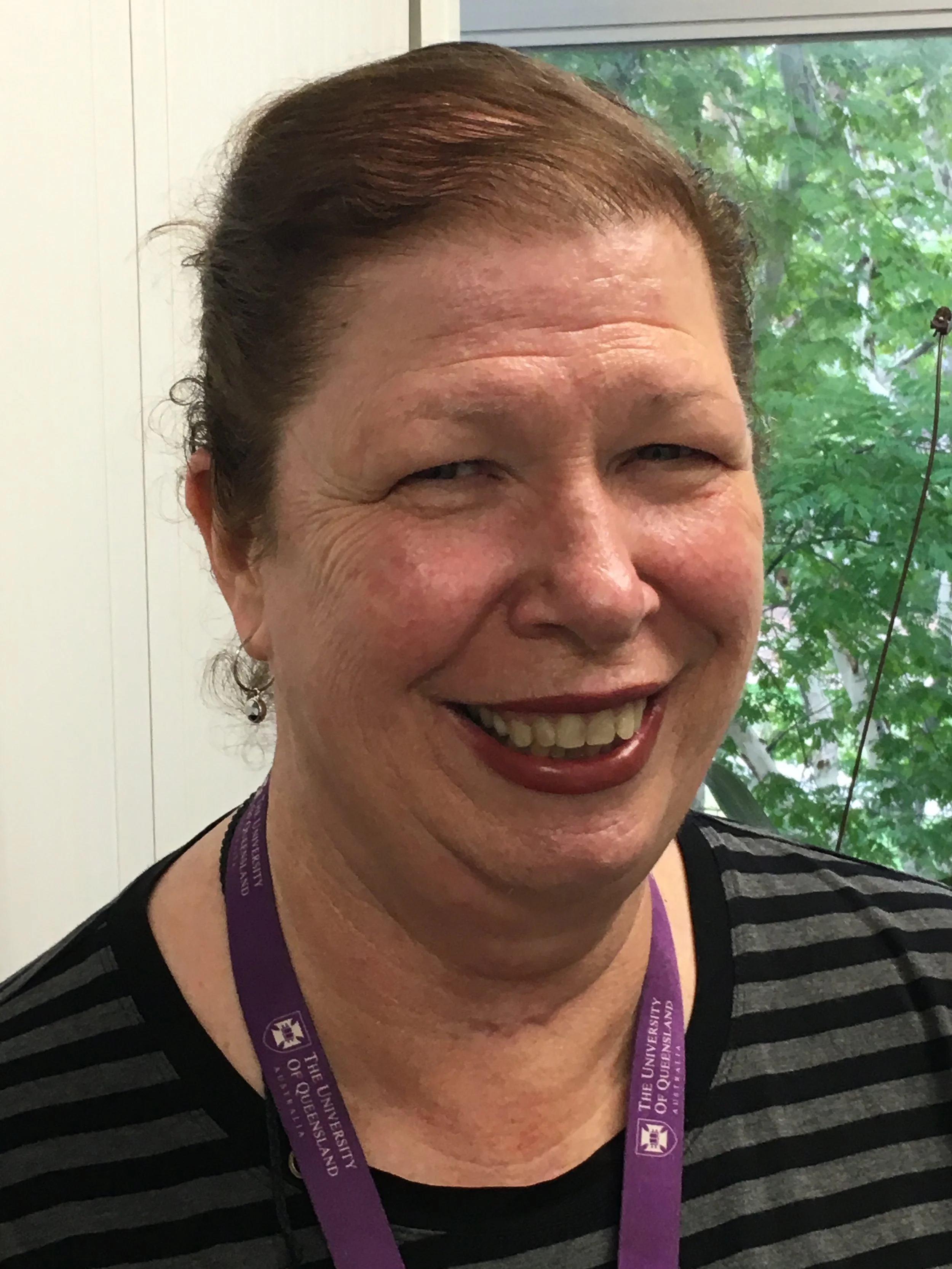
She has been involved in intellectual disability research for many years. A major aspect of her work has been maintaining connection with individuals and families involved in the longitudinal Down syndrome research study that has been running for over 40 years. She is a member of IASSIDD.

-
Ruth Faragher is a member of IASSIDD and on the executive committee of the Down Syndrome SIRG. She has extensive experience as a self-advocate, being a member of the Queensland Down Syndrome Advisory Network, speaking at international conferences and serving on committees as part of research projects.
-
Rhonda Faragher is Professor of Inclusion and Diversity at the University of Queensland where she is Director of the Down Syndrome Research Program. She is a mathematics teacher by background and undertakes research that improves the quality of life of individuals with disabilities, particularly in inclusive classroom contexts. She is a Fellow of IASSIDD and Co-Editor in Chief of IASSIDD’s Journal of Policy and Practice in Intellectual Disabilities. She serves on the editorial boards of the International Journal of Disability, Development and Education, and the Mathematics Education Research Journal. In addition, she is an expert reviewer for international grant schemes.
Overview
‘Inclusive research’ means that research includes people with intellectual and developmental disabilities.
In this workshop inclusive research teams share what they learned doing inclusive research. Join us to learn more about what inclusive research is, and how you can make your research more inclusive.
This workshop is for everyone who wants to do inclusive research. Both academic researchers and researchers with lived experience of disability are welcome.
Learning goals
Participants will:
become familiar with the history of inclusive research
understand what inclusive research is and what it is not
learn from the experiences of inclusive research teams in designing, conducting and disseminating inclusive research projects
identify strategies they can apply to make their own research more inclusive
contribute to the development of a model of inclusive research
Workshop summary
This interactive workshop will be facilitated by inclusive research teams from Australia. The workshop will build on experiences of participants and give some examples of successful research projects that have been undertaken with researchwer with intellectual disability on the teams. The history and principles of inclusive research will be explored, and the inclusive research team will share their experiences and the strategies they use in designing, conducting and disseminating their inclusive research projects. Participants will contribute to the development of a disability research model.
The facilitators will be prepared to engage both academic researchers and people with lived experience of disability by gearing workshop discussion and activities to their needs and interests.
The workshop will use accessible inclusive teaching practices and materials (e.g. videos, plain language, and visuals) to accommodate the access needs of workshop participants and facilitators including individuals with intellectual and developmental disabilities.
Workshop 8 - Changi 1
Assessing the Quality of Positive Behaviour Support Plans – Introducing a New Suite of Assessment Tools for Practitioners, People with Intellectual Disability and their Support Network
Presenters

-
Karen combines her mental health and disability clinician background with her work as an academic, researcher, and policy leader. She is Professor of Behaviour Support in the School of Education, specialising in positive behaviour supports for children and adults with intellectual and developmental disabilities. In addition to positive behaviour supports, Karen leads research and practice improvement in; reductions in the use of restrictive practices, clinical innovation and governance, forensic disability, and supports for people with high and complex disability support needs, and their staff and families.
Karen is a Fellow of IASSIDD.

-
Maria is an experienced disability researcher and Research Fellow at the University of Queensland. As a registered psychologist, Maria aims to conduct research that translates into practical solutions that positively impact the lives of people with intellectual disability, their families, and the services that support them. In collaboration with Australian service providers and policy makers, she has been involved in research examining voluntary out-of-home care (relinquishment) of young people with disability and service responses to improve the identification of families in crisis. Maria has also led research examining disability work-related issues such as job burnout in the disability support worker population and defining the role of a support worker. Lastly, she has also worked on projects evaluating positive behaviour support plan quality at an organisation, state, and national level in Australia, including projects that have led to the development of new quality assessment tools.
Overview
Interested in checking if a positive behaviour support plan is good? Want to know what’s new in this space? This workshop will demonstrate two new plan quality assessment tools (The Positive Behaviour Support Plan Quality Assessment and the Behaviour Support Plan Audit Tool) and their plain language and Easy Read counterparts for people with intellectual and developmental disability, family members and support staff. You will get to practice using the tools in session and provide feedback on their usability.
Learning goals
Participants will:
be informed about two new assessment tools to measure the quality of positive behaviour support plans: (1) the Positive Behaviour Support Plan Quality Assessment (PBSP-QA; Vassos & Nankervis, 2025), and (2) the Behaviour Support Plan Audit Tool (BSPA-tool; Vassos, Davis, Wardale & Nankervis, 2021).
received guidance and the opportunity to practice how to effectively use the tools to score positive behaviour support plan content accurately.
received guidance and the opportunity to practice how to effectively use the plain language and Easy Read versions of these tools to gather feedback on positive behaviour support plans from people with intellectual and developmental disability and their support network (family members and support staff).
Workshop summary
The aim of this workshop is to introduce a new suite of assessment tools developed by the workshop presenters to measure the quality of positive behaviour support plans. The Positive Behaviour Support Plan Quality Assessment (PBSP-QA; Vassos & Nankervis, 2025) and the Behaviour Support Plan Audit Tool (BSPA-tool; Vassos, Davis, Wardale & Nankervis, 2021) will be discussed, including information on how the tools were developed and psychometric information. Plain language and Easy Read versions of these tools will also be demonstrated, that can be used by behaviour support practitioners to gather feedback on plans they develop from people with intellectual or developmental disability, their families, and support staff. Workshop attendees will have the opportunity to practice using the tools to score mock plan content in session, with plenty of opportunity to ask questions and to provide feedback on the tools to support their continual development and refinement.